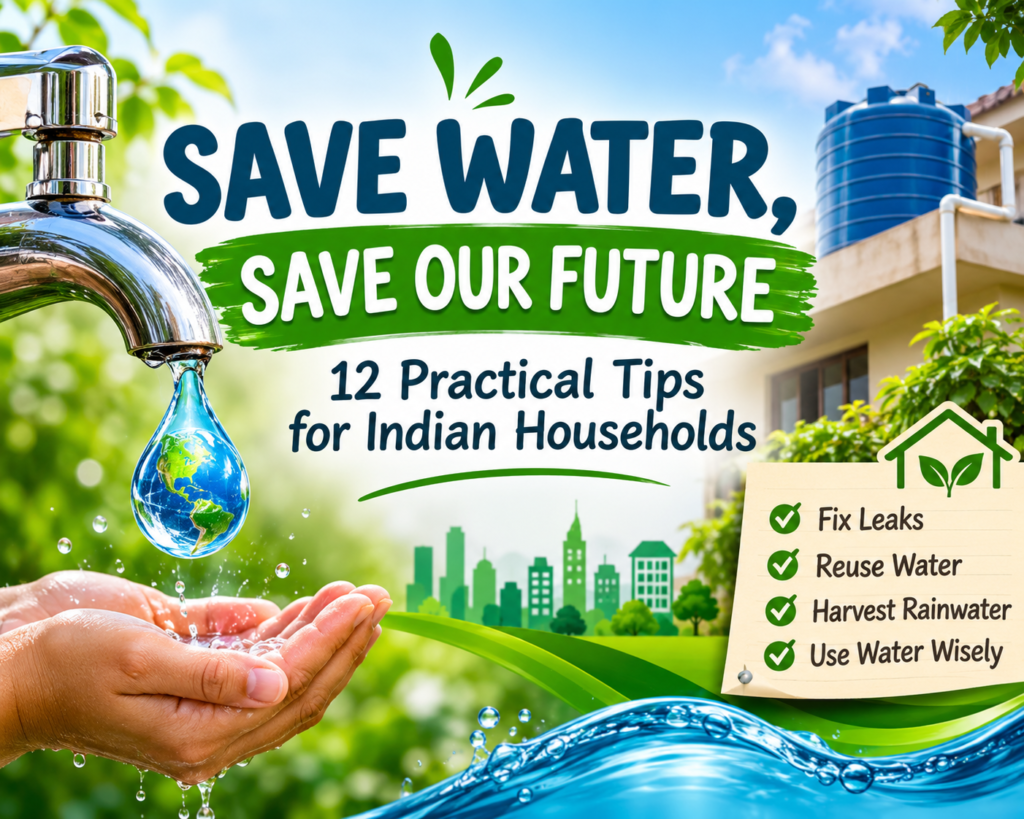
Save Water at Home: 12 Practical Tips for Indian Households
Save water at home with simple everyday habits that can reduce water wastage, lower household expenses and protect India’s precious freshwater resources. From repairing leaking taps to collecting rainwater, every small action can help Indian families build a more sustainable lifestyle.
Water is essential for life, but increasing urbanisation, groundwater extraction, population growth and changing rainfall patterns are putting pressure on freshwater resources. Many Indian households depend on municipal supplies, borewells and private water tankers, making responsible water usage more important than ever.
The good news is that you do not need expensive equipment or major lifestyle changes to save water. Simple actions such as turning off taps, reusing suitable household water, installing water-efficient fixtures and harvesting rainwater can make a difference.
In this guide, discover 12 practical ways to save water at home and learn how Indian families can make water conservation part of their daily routine.
Why Is It Important to Save Water in India?
India faces growing pressure on its freshwater resources because of increasing population, urban development, agricultural demand and changing rainfall patterns.
In several cities, households experience seasonal water shortages, particularly during summer. Groundwater depletion and excessive water consumption can make the situation more challenging.
According to the Ministry of Housing and Urban Affairs, urban water conservation requires efforts such as rainwater harvesting, wastewater reuse and restoration of water bodies.
Responsible water usage helps:
- Reduce unnecessary freshwater consumption.
- Protect groundwater resources.
- Lower household water expenses.
- Reduce energy consumption associated with water pumping.
- Support sustainable cities and communities.
- Preserve natural resources for future generations.
Water conservation is not only the responsibility of governments. Every family can contribute through small and consistent daily habits.
12 Practical Ways to Save Water at Home
1. Turn Off the Tap While Brushing Your Teeth
Leaving the bathroom tap running while brushing your teeth wastes water unnecessarily.
Instead, wet your toothbrush, turn off the tap and use a glass of water for rinsing.
This simple habit is easy for everyone in the family to follow and helps children develop responsible water usage habits.
Practical tip: Keep a reusable glass near your bathroom sink and avoid running water when it is not needed.
2. Repair Leaking Taps and Pipes Immediately
A dripping tap may look harmless, but continuous leakage can waste a surprising amount of water over time.
Inspect your kitchen, bathroom, balcony and outdoor plumbing regularly. Check for leaking taps, damaged pipe connections, faulty toilet flushes and overflowing overhead tanks.
Repairing these problems promptly is one of the easiest ways to save water without spending money on expensive equipment.
Practical tip: Check your water meter when all taps and appliances are switched off. Unexpected movement may indicate a hidden leak.
3. Use a Bucket Instead of Long Showers
Long showers can consume more water than many households realise.
Using a bucket and mug allows you to control how much water you use while bathing. If you prefer showers, consider installing a low-flow showerhead and keeping bathing time short.
Practical tip: Try a five-minute shower target or use a measured amount of water in a bucket.
4. Collect and Reuse RO Wastewater
Reverse osmosis (RO) water purifiers are common in Indian kitchens. However, they also produce reject water during purification.
Instead of allowing this water to flow directly into the drain, collect it in a clean container.
Depending on its quality, suitable RO reject water may be reused for:
- Mopping floors.
- Cleaning balconies.
- Washing outdoor areas.
- Pre-rinsing dirty utensils.
RO reject water can contain concentrated dissolved salts and other impurities. Do not automatically use it for drinking, cooking or watering sensitive plants.
Practical tip: Keep a collection container near your RO purifier outlet and use the water for appropriate cleaning activities.
5. Run Washing Machines With Full Loads
Running washing machines with only a few clothes can increase unnecessary water and electricity consumption.
Whenever possible, collect enough laundry for a full load. Select an appropriate washing programme and avoid unnecessary additional rinse cycles.
When purchasing a replacement appliance, compare water and energy efficiency ratings.
Practical tip: Organise specific laundry days instead of running multiple small washing cycles.
6. Reuse Water From Washing Vegetables
Water used to rinse fruits and vegetables does not always need to go down the drain.
Collect relatively clean rinsing water in a bowl and reuse it for suitable ornamental plants or outdoor cleaning.
Avoid reusing water containing detergents, cleaning chemicals or excessive salt.
Practical tip: Keep a small basin in your kitchen sink while preparing vegetables.
7. Install Water-Saving Fixtures
Water-efficient fixtures can help Indian households reduce unnecessary water flow without sacrificing everyday convenience.
Consider installing:
- Tap aerators.
- Low-flow showerheads.
- Dual-flush toilet systems.
- Water-efficient washing machines.
- Automatic shut-off taps.
These improvements are especially useful in apartments and larger households where daily water consumption can be high.
Practical tip: Start with affordable tap aerators and upgrade other fixtures when necessary.
8. Practise Rainwater Harvesting at Home
Rainwater harvesting is one of the most useful ways to save water and support groundwater sustainability.
Instead of allowing rooftop rainwater to flow directly into drains, households can collect and store it or direct it into suitable groundwater recharge systems.
A basic rooftop rainwater harvesting system may include:
- Rooftop collection surfaces.
- Rainwater pipes.
- First-flush arrangements.
- Filtration systems.
- Storage tanks or recharge pits.
Regular maintenance is essential to prevent contamination and blockages. Stored rainwater requires appropriate treatment before drinking.
The Government of India’s Catch the Rain campaign encourages individuals, institutions and communities to collect rainwater where it falls.
Read more about the Catch the Rain campaign by the Ministry of Jal Shakti.
Practical tip: Ask your apartment association whether its rainwater harvesting system is functional and regularly maintained.
9. Use Drip Irrigation for Your Home Garden
Traditional watering methods can waste water through evaporation, runoff and overwatering.
Drip irrigation delivers water closer to plant roots, helping reduce unnecessary consumption.
You can also improve garden water efficiency by:
- Watering plants early in the morning or evening.
- Using watering cans instead of running hoses.
- Adding mulch to retain soil moisture.
- Grouping plants according to their watering needs.
- Choosing suitable native and drought-tolerant plants.
Practical tip: Install a simple drip irrigation kit for your balcony garden or terrace plants.
For more sustainable lifestyle ideas, explore our guide on reducing your carbon footprint through everyday lifestyle changes.
10. Avoid Washing Vehicles With Running Hoses
Using a running hose to wash cars and motorcycles can waste considerable amounts of water.
A bucket, sponge and reusable cleaning cloth are often sufficient for regular vehicle cleaning.
For light dust removal, suitable waterless cleaning methods can also help reduce water consumption.
Practical tip: Avoid unnecessary full vehicle washes and use controlled amounts of water whenever cleaning.
11. Explore Household Greywater Recycling
Greywater refers to wastewater generated from certain household activities, such as bathing, handwashing and laundry.
With suitable treatment and separate plumbing arrangements, some greywater can be reused for non-drinking purposes, including toilet flushing and landscape irrigation.
Responsible greywater recycling requires:
- Separating greywater from sewage.
- Installing appropriate filtration and treatment.
- Avoiding untreated wastewater on edible plants.
- Maintaining treatment systems regularly.
- Following local plumbing and sanitation requirements.
Practical tip: Larger homes and residential societies can explore professionally designed greywater recycling systems.
The Ministry of Housing and Urban Affairs’ Guidelines for Urban Water Conservation provide additional information about urban water-management approaches.
12. Monitor Your Daily Water Consumption
You cannot manage what you do not measure.
Checking water bills, overhead tank levels and water meter readings can help identify unnecessary household consumption.
Create a simple monthly water management routine:
- Inspect taps and pipes every week.
- Check overhead tanks for overflow.
- Monitor monthly water bills.
- Encourage family members to use water responsibly.
- Identify unusual changes in consumption.
- Repair plumbing problems immediately.
Practical tip: Maintain a monthly household water usage record and compare readings to understand your progress.
Daily Habits to Save Water in Indian Households
Building a sustainable lifestyle becomes easier when everyone in the family participates.
Here is a simple daily routine that Indian households can follow.
| Time | Water-saving habit |
|---|---|
| Morning | Turn off taps while brushing |
| Bathing | Use a bucket or shorter showers |
| Kitchen | Collect suitable vegetable-washing water |
| Laundry | Run full washing machine loads |
| Afternoon | Check taps and overhead tanks |
| Gardening | Use drip irrigation or watering cans |
| Evening | Inspect leaks and unnecessary water usage |
Consistency matters more than expensive equipment. Start with small changes and gradually introduce better water management practices.
Common Mistakes to Avoid When Trying to Save Water
While adopting water-saving habits, avoid practices that can create hygiene and maintenance problems.
Some common mistakes include:
- Reusing untreated wastewater for drinking or cooking.
- Storing rainwater without proper filtration and maintenance.
- Ignoring hidden plumbing leaks.
- Overwatering balcony and terrace plants.
- Allowing overhead tanks to overflow.
- Using unsuitable wastewater on edible crops.
- Installing water-saving equipment without maintaining it.
Responsible water conservation should always go together with safe sanitation and proper water management.
How Rainwater Harvesting Helps Save Water in India
India receives seasonal rainfall, but much of this water can flow away through drainage systems without being properly collected or managed.
Rainwater harvesting allows households and communities to capture rooftop rainwater and use suitable systems for storage or groundwater recharge.
Its potential benefits include:
- Reducing dependence on conventional water sources.
- Supporting groundwater replenishment.
- Reducing surface runoff.
- Improving local water availability.
- Encouraging community participation in water management.
The Government of India’s Jal Shakti Abhiyan: Catch the Rain campaign promotes rainwater harvesting, groundwater recharge and community participation.
For additional information, read the Urban Water Conservation Guidelines.
Water conservation also connects with the United Nations Sustainable Development Goals, particularly SDG 6, which focuses on clean water and sanitation.
Explore our detailed article on Sustainable Development Goals and their importance.
Frequently Asked Questions About Saving Water
1. What are the easiest ways to save water at home?
Turn off taps when they are not needed, repair leaking pipes, use buckets instead of long showers, run full washing machine loads and collect suitable household water for reuse.
2. How can Indian households reduce water wastage?
Indian families can reduce water wastage by monitoring daily consumption, preventing overhead tank overflow, installing water-efficient fixtures, harvesting rainwater and adopting responsible everyday habits.
3. How can I reuse RO wastewater?
RO reject water can be collected and reused for suitable cleaning activities, such as mopping floors and washing outdoor areas. Its suitability depends on water quality, and it should not automatically be considered safe for drinking or gardening.
4. Does rainwater harvesting help recharge groundwater?
Yes. Properly designed rainwater harvesting and recharge systems can support groundwater replenishment depending on local soil conditions, geology and groundwater quality.
5. What is greywater recycling?
Greywater recycling involves collecting and treating suitable wastewater from bathing and laundry for non-drinking purposes, such as toilet flushing and landscape irrigation.
6. Why should we save water in India?
Saving water helps protect freshwater resources, reduce pressure on groundwater, improve water security and support sustainable development.
7. How can children learn to save water?
Children can learn by turning off taps, avoiding unnecessary water usage, helping identify leaks and participating in simple household water-saving activities.
Conclusion: Every Drop Counts
Learning to save water does not require a complete lifestyle transformation. It starts with small, consistent actions that become part of everyday life.
From repairing leaking taps and reusing suitable household water to installing rainwater harvesting systems, every Indian household can contribute to a more sustainable water future.
Water is a shared natural resource, and protecting it requires participation from individuals, communities, businesses and governments.
Start with these 12 practical habits today. Encourage your family to participate and make responsible water usage a permanent part of your lifestyle.
Save water. Protect nature. Build a sustainable future.
Explore more environmental awareness, sustainable living and conservation guides on TheGreenista.