
For years, sustainability advocates have challenged companies that exaggerate their environmental achievements.
From vague “eco-friendly” labels to questionable carbon-neutral claims, greenwashing has become one of the biggest obstacles to meaningful climate action. It allows businesses to appear sustainable without making the difficult changes required to reduce their environmental impact.
Now, a similar pattern is emerging and this time around artificial intelligence. As AI dominates headlines and boardroom conversations, companies are increasingly attaching the term to products, services, and sustainability initiatives. While many organizations are making genuine investments in technology, others appear to be using AI as a marketing tool rather than a meaningful solution. The result is a growing phenomenon termed as AI washing. And for sustainability professionals, investors, and conscious consumers, it may represent the next frontier of greenwashing.
From greenwashing to AI washing
Greenwashing has traditionally involved misleading sustainability claims that create an environmentally responsible image without sufficient evidence or action. AI washing follows a similar track.
Organizations highlight artificial intelligence in marketing campaigns, annual reports, sustainability communications, and investor presentations to signal innovation and progress. However, in some cases, the actual use of AI is minimal, exaggerated, or entirely unclear. Don’t get confused. The issue is not whether companies use AI. The issue is whether businesses are making claims they cannot substantiate. In that sense, AI washing is less about technology and more about transparency.
Why sustainability enthusiasts should pay attention
At first glance, AI washing may seem like a technology issue rather than a sustainability issue. But sustainability has always been about accountability.
Whether a company claims to reduce emissions, eliminate waste, improve supply chain transparency, or deploy artificial intelligence, stakeholders deserve evidence that those claims are accurate. The sustainability movement has spent decades pushing organizations toward measurable outcomes, transparent reporting, and credible disclosures.
If businesses begin using AI as another buzzword to strengthen their environmental image without demonstrating real impact, the sustainability community has every reason to be concerned.
The rise of tech greenwashing
One of the most significant trends in recent years has been the growing connection between AI and sustainability.
Organizations increasingly promote AI-powered solutions for:
- Carbon accounting
- Energy optimization
- Sustainable supply chain management
- Climate risk assessment
- Resource efficiency
- Environmental reporting
Many of these innovations have genuine potential. However, problems arise when AI becomes a shortcut to credibility.
A company may market an “AI-powered sustainability platform” without explaining how the technology works. Another may suggest that AI is reducing emissions while providing little evidence of measurable environmental benefits.
This is where tech greenwashing enters the conversation.
Just as businesses once relied on vague environmental language to appear sustainable, some organizations are now using vague AI language to appear innovative and environmentally responsible. The combination can be particularly powerful and particularly misleading.
When innovation becomes a marketing strategy
Businesses understand the value of being associated with major trends. Over the past decade, sustainability became a powerful branding tool. Today, artificial intelligence occupies a similar position. When these two trends intersect, the temptation to overstate capabilities becomes even greater.
A sustainability initiative described as “AI-powered” may attract more attention from investors, customers, and media than a conventional program delivering the same results. Yet the effectiveness of a sustainability effort should be measured by outcomes not trends. If an AI solution cannot demonstrate environmental benefits, improved efficiency, or measurable sustainability performance, its value should be questioned.
What responsible AI looks like in sustainability
The conversation should not be about rejecting artificial intelligence. AI has enormous potential to support sustainability goals. Responsible AI can help organizations identify inefficiencies, improve resource management, predict climate-related risks, and analyze large environmental datasets more effectively than traditional approaches. The key difference lies in transparency.
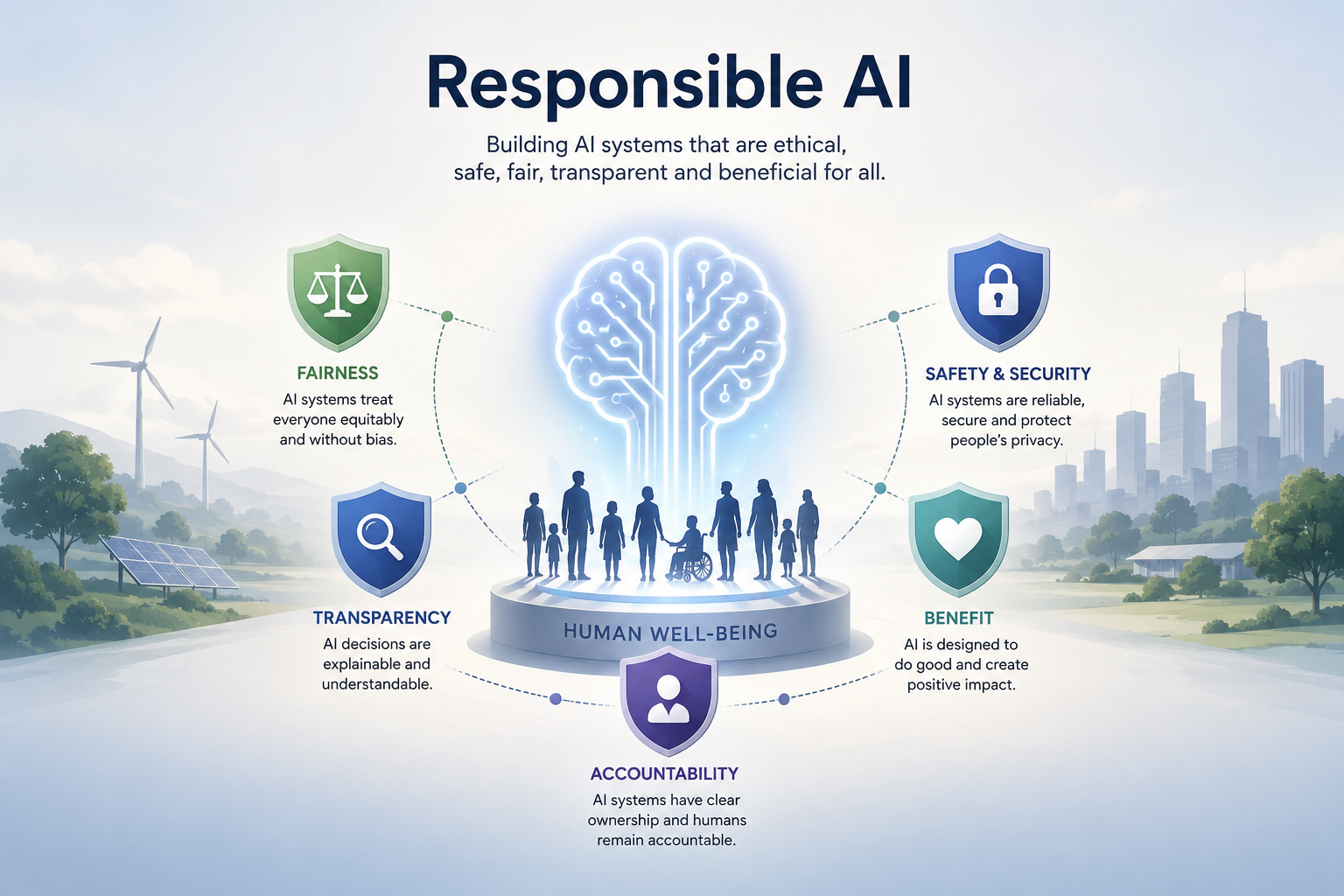
Responsible AI initiatives should clearly communicate:
- How the technology is being used
- What sustainability challenge it addresses
- What measurable outcomes it delivers
- What limitations still exist
This approach aligns with the same principles sustainability advocates have long demanded from environmental reporting. Claims should be supported by evidence. Results should be measurable. Communication should be honest.
Lessons from greenwashing
The rise of greenwashing taught businesses an important lesson. Consumers, investors, regulators, and sustainability professionals eventually began demanding proof. Vague promises were no longer enough. Environmental claims increasingly required data, disclosures, certifications, and accountability. The same evolution is likely to occur with AI-related claims.
Organizations that rely on hype may gain short-term attention, but those that prioritize transparency will build long-term trust. For sustainability leaders, the challenge is ensuring that AI does not become the latest tool for misleading sustainability claims.
Be aware
Artificial intelligence may shape the future of business, just as sustainability continues to shape the future of corporate responsibility. Both have the potential to drive meaningful change. Both can also be used as marketing shortcuts.
The sustainability movement has spent years exposing greenwashing and encouraging organizations to back their claims with action. As AI becomes increasingly integrated into sustainability strategies, the same level of scrutiny must apply.
Because whether a claim is environmental or technological, credibility is earned through evidence. And in a world already struggling with greenwashing, the last thing sustainability needs is another layer of corporate storytelling disconnected from reality.