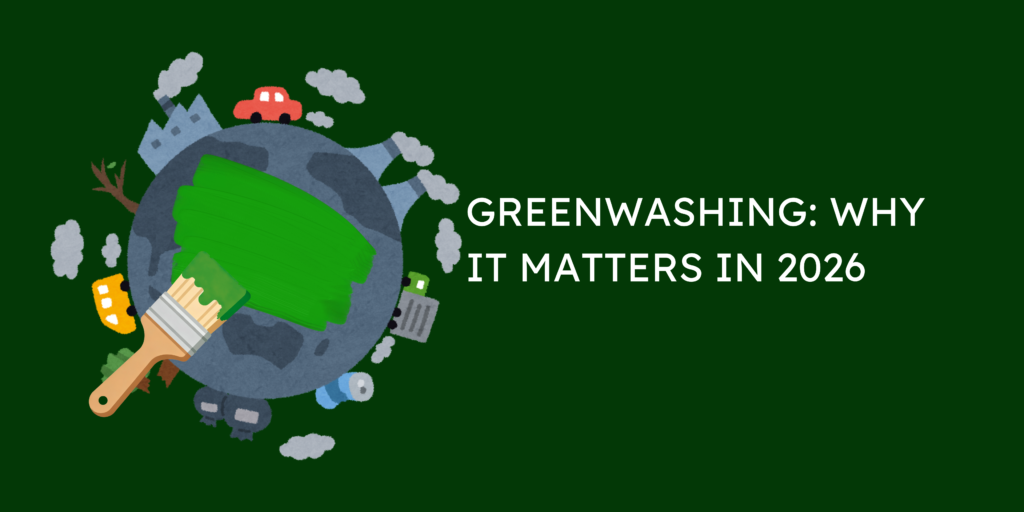
What is greenwashing?
Why do companies engage in greenwashing?
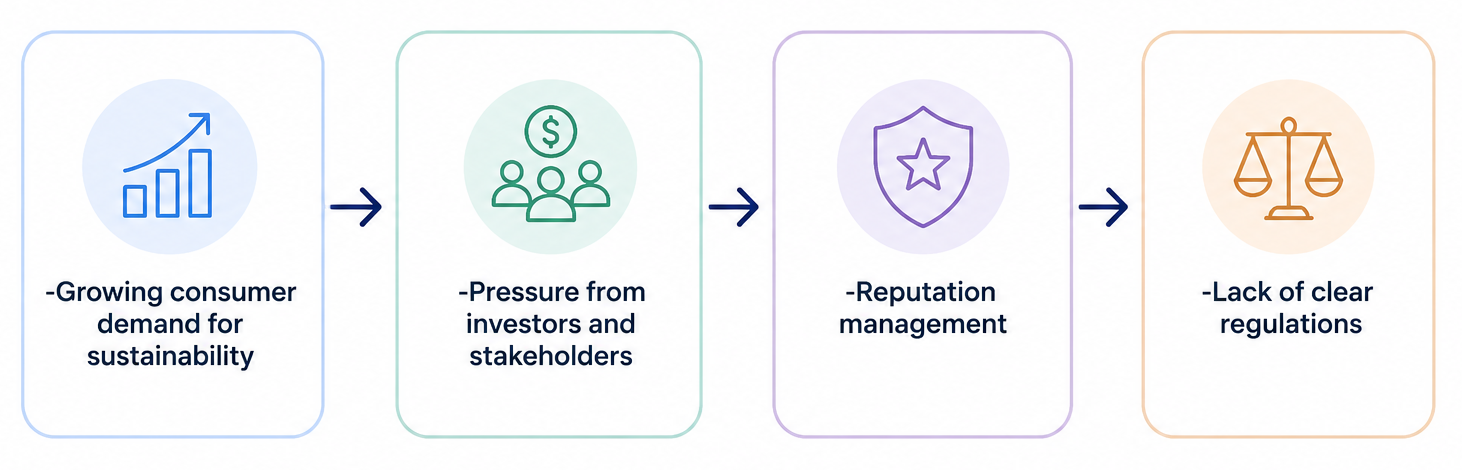
Growing consumer demand for sustainability: Consumers increasingly prefer brands that align with their values. Studies consistently show that many shoppers are willing to support companies with strong environmental credentials.
Pressure from investors and stakeholders: Environmental, Social, and Governance (ESG) performance has become an important consideration for investors. Consequently, companies may exaggerate their sustainability initiatives to attract investment or maintain a positive public image.
Reputation management: Businesses facing criticism over environmental impacts may use sustainability campaigns to improve their reputation rather than address underlying issues.
Lack of clear regulations: Although regulations around environmental claims are increasing globally, inconsistent standards still allow vague or unsubstantiated claims to persist.
Common greenwashing tactics
Using vague language: Words such as “green,” “eco-conscious,” “natural,” or “environmentally friendly” often sound impressive but may lack clear definitions or supporting evidence. For example, a company may describe a product as “all natural” without explaining what that actually means.
Highlighting minor environmental benefits: A business may promote a single sustainable feature while ignoring its larger environmental footprint. For instance, a clothing brand may advertise garments made from recycled packaging while continuing to rely heavily on fossil-fuel-based synthetic fabrics and overproduction.
Misleading visuals and packaging: Images of forests, leaves, waterfalls, and earthy colours can create the illusion of sustainability even when no meaningful environmental benefits exist.
Lack of transparency: Companies sometimes make broad corporate sustainability claims without providing data, measurable targets, or third-party verification.
Irrelevant claims: A product may advertise itself as being free from a harmful substance that has already been banned by law for decades. While technically true, such claims can mislead consumers into believing the product is more sustainable than alternatives.
Real-world greenwashing examples
Fast fashion
Fossil fuel companies
Single-use plastics
Carbon neutral claims
How greenwashing impacts sustainability
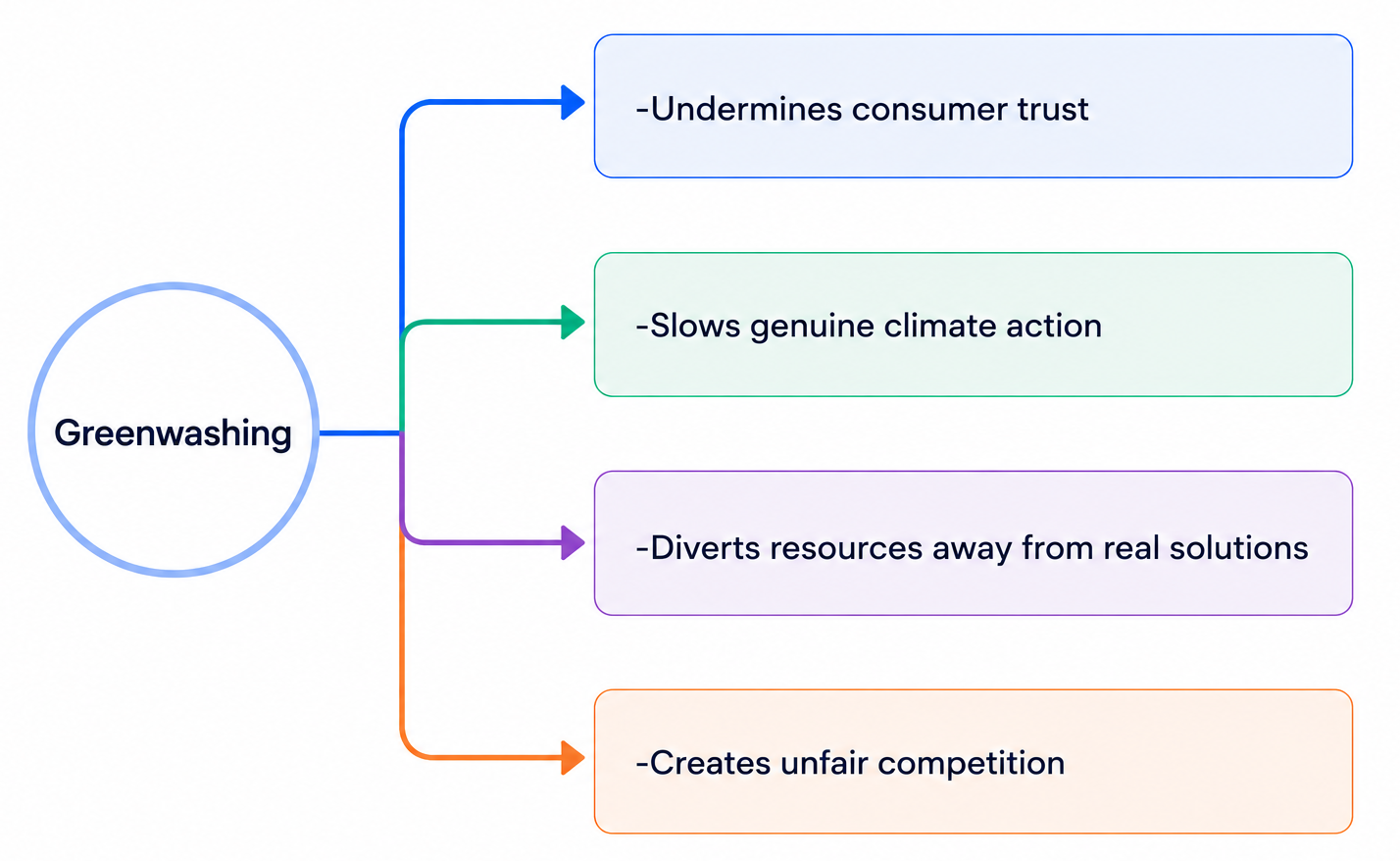
It undermines consumer trust: When consumers repeatedly encounter misleading sustainability claims, they may become skeptical of all environmental messaging. This erosion of trust can harm genuinely sustainable businesses that are making real efforts to reduce their impacts.
It slows genuine climate action: Greenwashing creates the illusion of progress without delivering meaningful environmental improvements. As a result, companies may delay necessary changes while continuing business as usual.
It diverts resources away from real solutions: Organizations that invest heavily in sustainability marketing rather than operational improvements may allocate resources inefficiently, limiting investments in innovation, renewable energy, circular economy initiatives, and emissions reductions.
It creates unfair competition: Businesses genuinely committed to sustainability often incur higher costs to improve supply chains, reduce emissions, or adopt responsible sourcing practices. Greenwashing enables less responsible companies to compete unfairly by benefiting from sustainability-related consumer demand without making comparable investments.
The rise of new forms of greenwashing
- AI washing: Exaggerating or misrepresenting artificial intelligence capabilities or sustainability benefits.
- ESG washing: Overstating environmental, social, or governance performance.
- Net-zero washing: Making ambitious climate pledges without credible implementation plans.
- Climate washing: Portraying climate commitments more positively than warranted.
Why transparency matters
Set measurable environmental targets: Clear targets give sustainability efforts direction and accountability. Instead of broad promises, companies should define specific goals for emissions, waste, water use, energy efficiency, or sourcing. Measurable targets make it easier to track progress over time and identify where improvements are needed. They also help stakeholders judge whether a company is making genuine change or simply using sustainability language to improve its image over the long term.
Publicly disclose progress: Transparency is essential because sustainability claims mean little without evidence. Companies should share regular updates on their environmental performance, including both achievements and areas where targets have not yet been met. Public reporting allows consumers, investors, and regulators to see whether commitments are credible. It also encourages internal accountability, since teams are more likely to follow through when progress is visible and measurable across the entire organization.
Report both successes and challenges: Honest sustainability communication should not focus only on positive outcomes. Sharing setbacks, delays, and unresolved issues shows that a company is taking its responsibilities seriously and understands the complexity of real environmental change. This kind of openness builds trust because it signals that the organization is not hiding problems behind polished marketing. It also creates space for improvement, learning, and more realistic long-term planning.
Seek independent verification where possible: Third-party verification strengthens sustainability claims by showing that they have been reviewed by an external expert or certification body. Independent checks reduce the risk of exaggerated reporting and give audiences more confidence in the information being shared. Whether through audits, certifications, or verified disclosures, outside validation helps separate genuine progress from marketing spin and makes environmental claims more credible to stakeholders and the public overall.
Prioritize real impact over brand image: The most credible sustainability strategies are those that change how a business operates, not just how it is perceived. Real impact comes from reducing emissions, improving supply chains, cutting waste, and investing in long-term solutions. When companies focus on substance rather than appearance, they are more likely to create meaningful environmental benefits and less likely to fall into greenwashing over the long term.